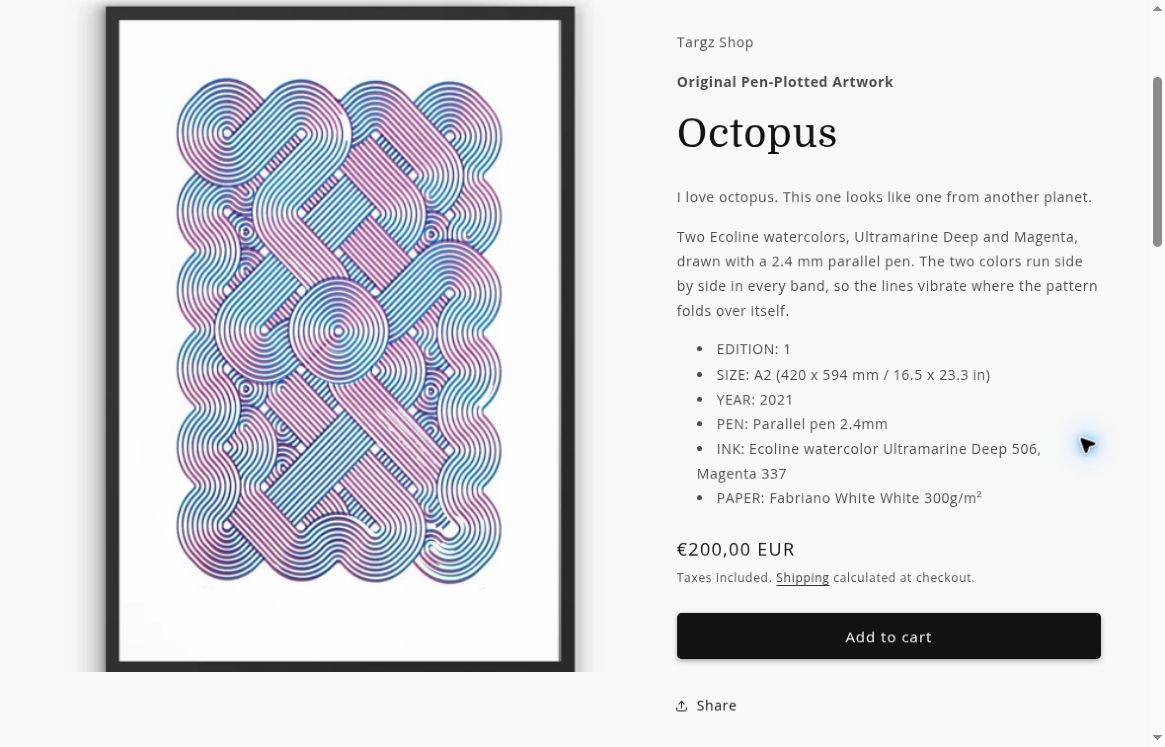
Rev Dan Catt’s Truncated Optimisation follows a practical plotting problem into a compositional experiment. After joining the separate paths in a Truchet design and changing their drawing order, he explores the shapes that appear before the plot is complete. Keeping only a selected portion of that sequence, or removing a portion, produces different arrangements from the same underlying design. The article includes process examples and explains why path order can affect more than plotting time. It also distinguishes his generator-specific tools from general SVG utilities, making this a useful process reference rather than a universal software recipe.
Related studio video: 70s Pop
Dan Catt explores 70s Pop patterns in an earlier weekly vlog. This is background to his pattern practice, rather than a demonstration of the later truncated-drawing workflow.
More from Dan Catt: Handwriting Forgery Machine, pt1 follows his work on plotting his own handwriting. Hidden Line Removal for Pen Plotters Made Easy with AxiDraw’s new Tool explores a separate plotting workflow.
Image credit: Daniel Catt, Truncated Optimisation. Screenshot of the design and draw-order comparison in the linked article.