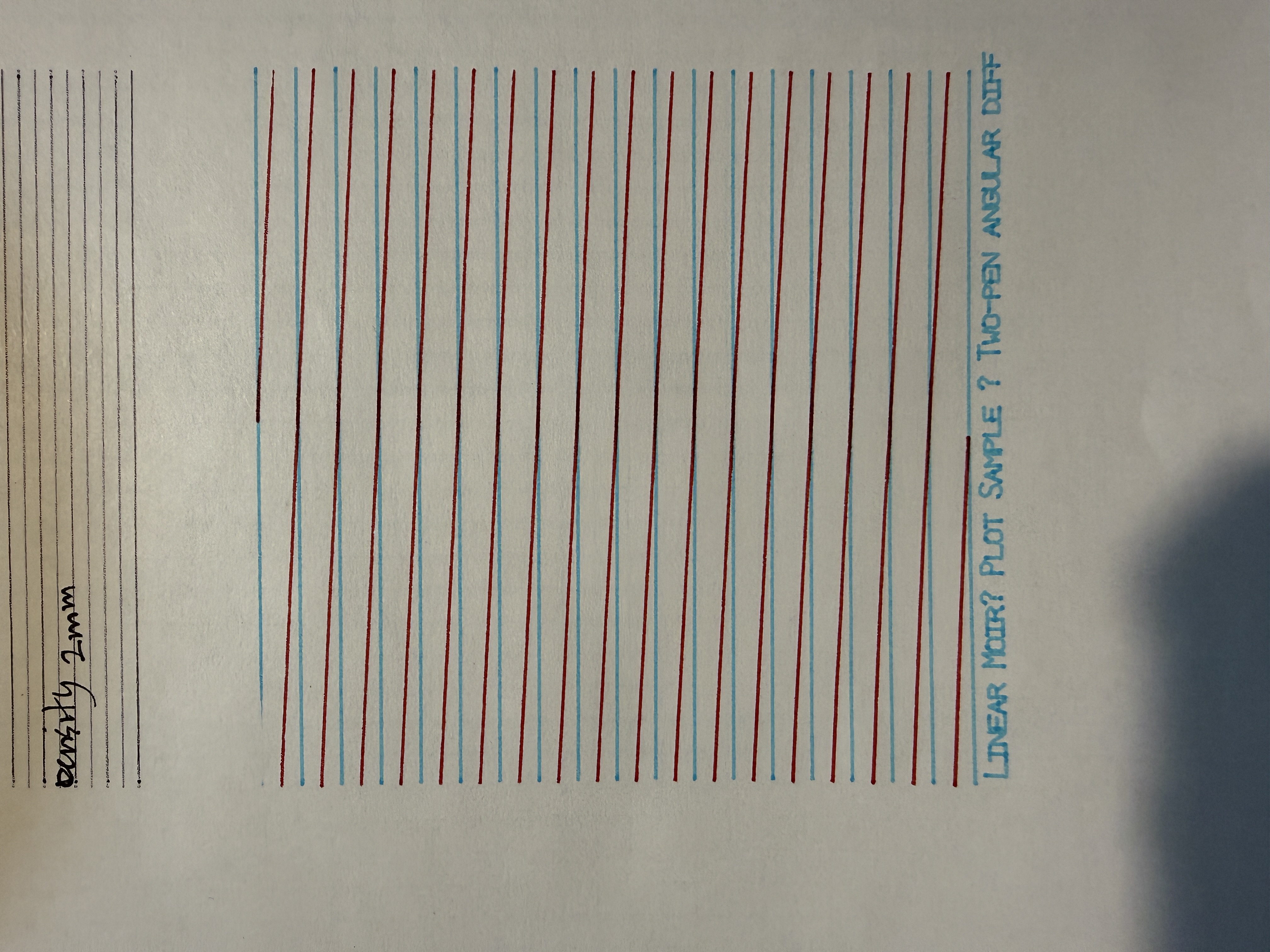
A drawing can look right on screen and still miss its place on the paper. While plotting a postcard-sized terrain image, I found that the border and title landed farther to the right and down than intended. The pen went off the edge and the card appears to have shifted as the hold-downs lost their grip.
The cards themselves measure 100 by 152 millimeters, a useful reminder that a nominal paper size and the stock in hand are not always identical. To make the starting position more repeatable, I used a 3D-printed alignment piece against the plotter’s registration stop.
A test with the revised jig brought the result close enough for my purposes: about half a millimeter to a millimeter of remaining variation. Some of that may come from the cards or how they sit against the stop. This is one practical test, not an accuracy specification for the machine.
For a postcard, the difference matters because the margin is small. On a larger 9-by-12-inch drawing, the same amount is much less likely to matter after matting and framing. Either way, a reliable place to set the paper gives me more freedom to concentrate on the marks instead of wondering where the drawing will land.
The next comparison is less about making the number perfect than about whether the setup stays consistent across more sheets and different paper.